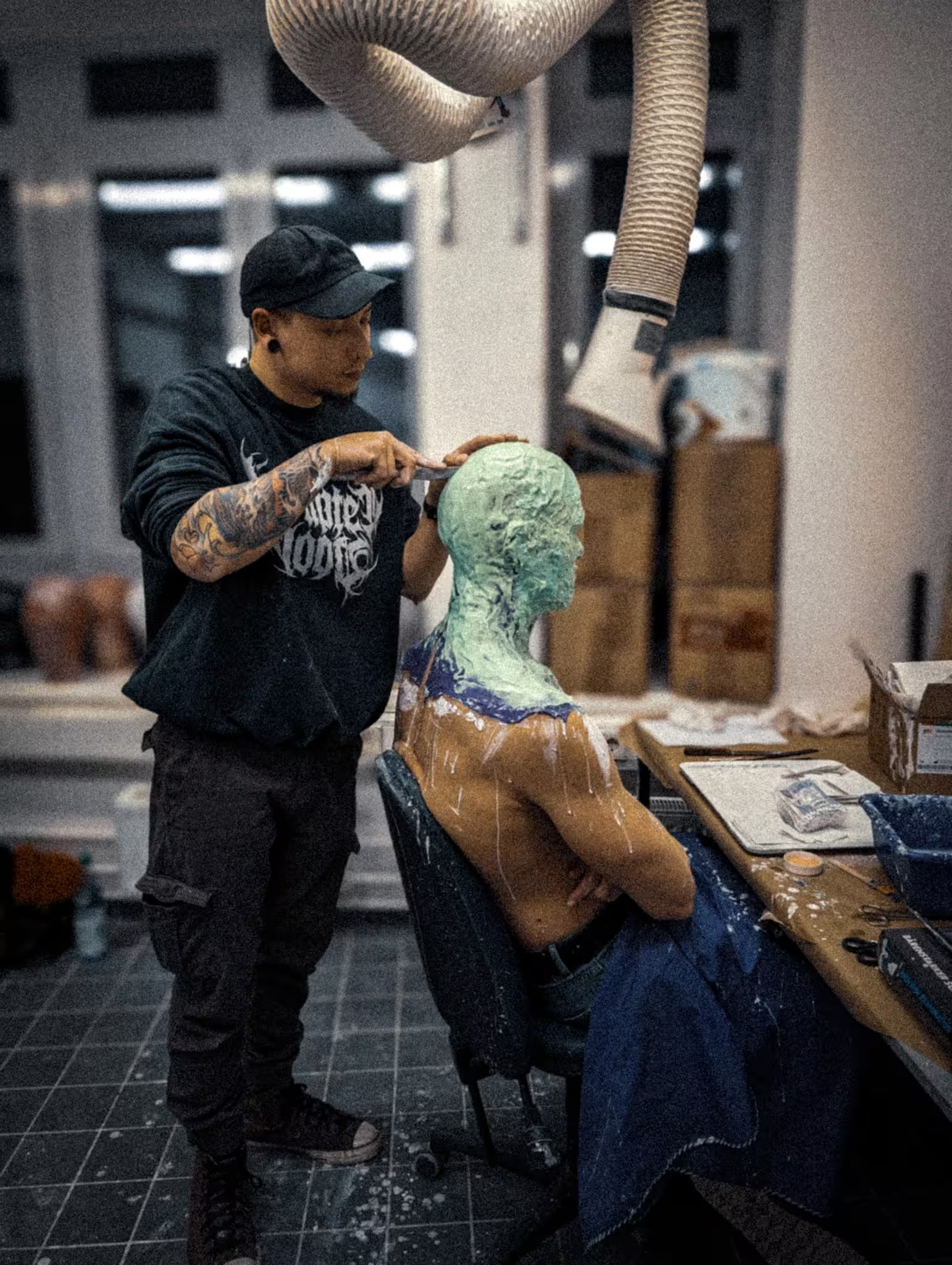
What are Bondo Transfers?
Bondo Transfers are ultra-thin, flexible special effects that are applied directly to the skin. They are frequently used to depict scars, cuts, burns or other skin details realistically.
Unlike larger silicone prosthetics, they focus on smaller areas and allow very subtle changes with natural transitions.
This makes them particularly suited to productions where fine detail is called for.
📷 Recommended image
Olivia Jones – Custom Old Age Bondo Transfers
ALT text
Custom-made Bondo Transfers for a natural ageing transformation.
When are Bondo Transfers used?
Bondo Transfers are used wherever small skin changes need to be depicted convincingly.
Typical applications are:
Scars
Cuts
Burns
Ageing effects
small anatomical changes
Film and television productions
Theatre
Halloween and event productions
They can be used on their own or in combination with larger film prosthetics.
📦 Practical example – Olivia Jones
For the individual ageing transfers on Olivia Jones, custom Bondo Transfers were developed that blended harmoniously into the existing make-up. The goal was a natural ageing effect without unnecessarily restricting the facial expression or movement.
➡️ Related project: Custom Old Age Bondo Transfers
💡 Practical tip from DoManh SFX
Bondo Transfers are excellent when a change should look as subtle as possible. Small details in particular can make a character more believable without the need for a large-scale prosthetic.
Bondo Transfer or silicone prosthetic?
Both techniques have their firm place in professional make-up artistry.
Bondo Transfers are particularly suited to smaller effects with flat transitions, whereas encapsulated silicone prosthetics are often used when larger anatomical changes or extensive character transformations are required.
Which solution is the right one always depends on the creative requirements and the desired result.
Further reading: KB-006 – Encapsulated Silicone Prosthetics
📷 Recommended image
Custom Old Age Bondo Transfers – close-up
ALT text
Fine ageing transfers with natural transitions to the skin.
Frequently asked questions (FAQ)
Are Bondo Transfers the same as silicone prosthetics?
No. The two techniques take different approaches and are used depending on the desired effect.
Can Bondo Transfers be made to order?
Yes. For professional productions they are often developed specifically for the particular performer and character.
What are Bondo Transfers particularly suited to?
Above all scars, injuries, ageing effects and other smaller skin changes with natural transitions.
Are Bondo Transfers only used in film?
No. They are also used in advertising, theatre, events, theme parks and high-end cosplay projects, among others.
Conclusion
Bondo Transfers are a proven technique in professional special-effects make-up artistry when realistic skin details with the flattest possible transitions need to be depicted.
They complement classic silicone prosthetics well and offer a flexible solution for smaller character changes, injury effects and ageing make-ups.
As with all special effects, however, it is not the technique alone that determines the result, but its suitable selection within the overall character design.
Related services
Film Prosthetics & Character Transformations
On-Set SFX & Production Support
Related projects
Custom Old Age Bondo Transfers – Olivia Jones
Old Age Prosthetics – Schauspiel Hannover
Halloween Show Hamburg
Sources
Smooth-On
Neill’s Materials
Stan Winston School
KauPo
FormX