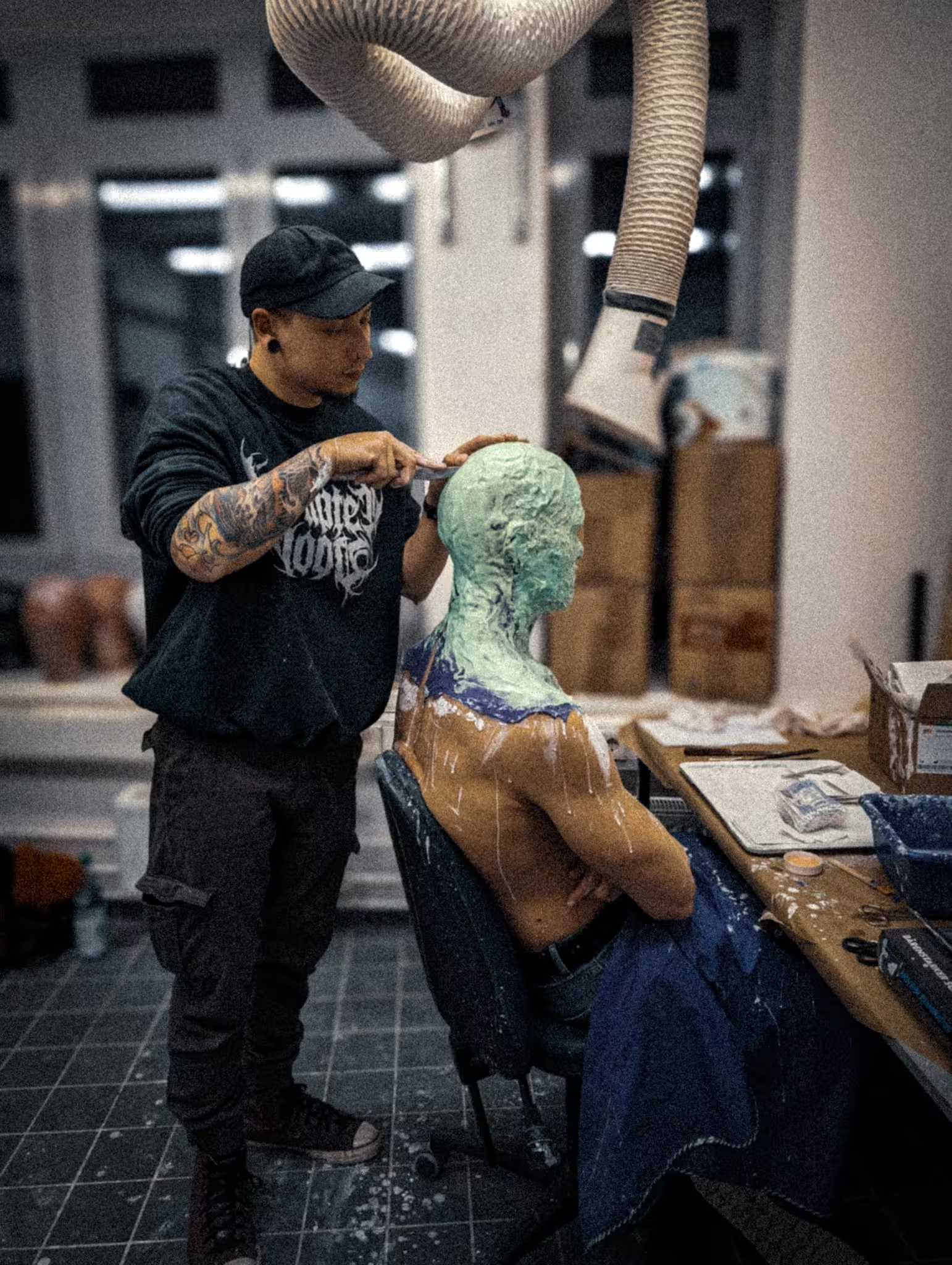
Why is painting so important?
Even the most detailed film prosthetic looks artificial if its coloring doesn't match the performer's skin.
Every person has individual skin tones, subtle colour variations, redness or shadows. These natural features make skin alive and unique.
The job of painting is to blend the prosthetic harmoniously into these conditions so that it is perceived as part of the character.
Colour tells stories
Painting isn't only about reproducing skin colour.
It also supports a character's story.
Colours can, for example, help portray a figure's age, exhaustion, injuries or state of health believably.
Small changes in coloring and contrast are often enough to significantly alter a character's effect.
That's why painting is as much a part of character design as sculpting or mould making.
📦 Case study – Alien SFX Make-up
For the Alien SFX Make-up, the final character didn't emerge from the prosthetic shape alone. Only the coordinated coloring gave the figure depth, texture and a believable overall impression.
➡️ Related project: Alien SFX Make-up – ZDF Streamergarten
💡 Practical tip from DoManh SFX
I never just try to copy skin colour. My goal is to match the coloring to the character and the performer so that the prosthetic looks natural and blends harmoniously into the overall picture.
Light is always part of it
The effect of a paint job changes depending on the lighting.
What looks natural in the studio can appear quite different under studio lighting or outdoors.
That's why coloring is always considered in relation to the requirements of the specific production. Camera, lighting concept and the desired look all play an important role.
It is precisely for this reason that painting is far more than the final step – it is a decisive part of the entire character development.
📷 Suggested image
Knabe Mix – finished body prosthetic
ALT text
Professionally painted body prosthetic with a natural skin effect under studio conditions.
Frequently asked questions (FAQ)
Why isn't the prosthetic enough on its own?
Without the right paint job, even a high-quality prosthetic often looks unnatural. Only the coloring makes it blend harmoniously into the overall picture.
Are film prosthetics always painted individually?
Yes. The paint job is tailored to the performer, the character and the requirements of the specific production.
What role does light play?
Light significantly affects colours and contrasts. That's why painting is always considered in relation to the later lighting.
Is painting part of character development?
Yes. It is an important part of character design and contributes significantly to how a figure later reads on screen or stage.
Conclusion
Painting is far more than the final step of a film prosthetic.
It brings together form, surface and character into a coherent whole and contributes decisively to making a transformation believable.
Professional characters therefore don't emerge from a high-quality prosthetic alone, but from the interplay of sculpting, mould making, material choice, painting and application.
Related services
Film prosthetics & character transformations
On-set SFX & production support
Related projects
Alien SFX Make-up – ZDF Streamergarten
Old Age Prosthetics – Schauspiel Hannover
Knabe Mix – Instinct3
Sources
Stan Winston School
Neill's Materials
Skin Illustrator
FormX
KauPo