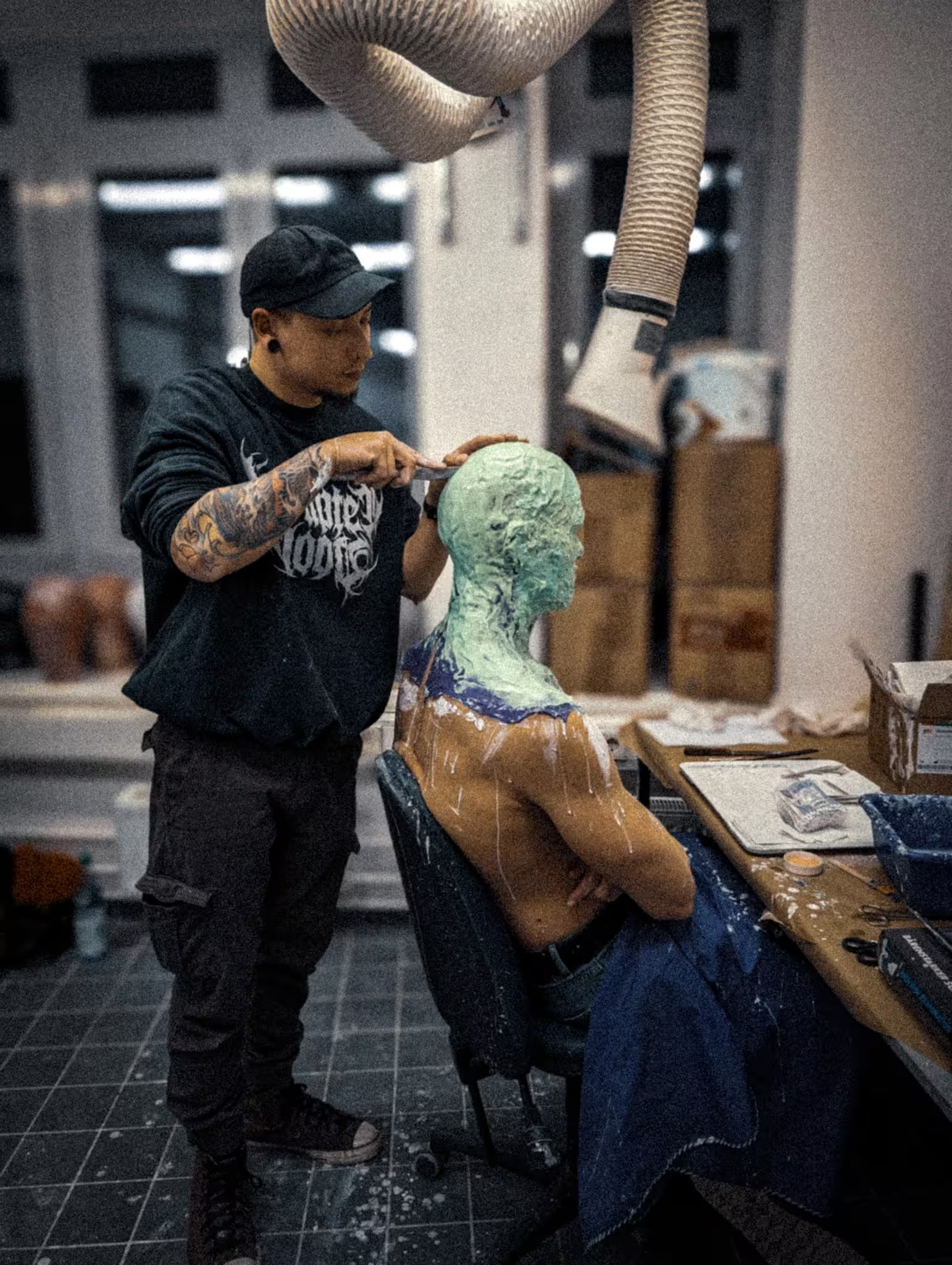
Silicone and foam latex pursue different goals
Silicone and foam latex are often compared with one another, even though they have different properties.
Silicone stands out above all for its natural surface effect, high level of detail and realistic movement. That's why it is now often used for ageing transformations, body prosthetics and high-end character prosthetics.
Foam latex, on the other hand, is particularly light and flexible. It has been used successfully in film productions for many decades and is applied above all to extensive creature designs or large-area character masks.
Both materials have their firm place in professional make-up.
The key differences at a glance
SiliconeFoam latexVery natural skin effectVery light materialHigh level of detailHigh flexibilityParticularly suited to close-upsProven for large-area charactersRealistic light effectLow weightOften used in modern productionsEstablished in film for decades
Neither material is fundamentally superior. What always matters is the result to be achieved.
📦 Case study – Knabe Mix
For the body prosthetic of the „Knabe Mix“ production, silicone was chosen because a natural skin effect and realistic ageing details were the priority. In close-ups in particular, fine detail reproduction played a decisive role.
➡️ Related project: Custom Old Age Body Film Prosthetic „Knabe Mix“
💡 Practical tip from DoManh SFX
I don't see silicone and foam latex as competitors. Both materials have their justification. What always matters is which material best supports the character and the requirements of the production.
When is each material suitable?
Silicone is particularly suited to:
Ageing transformations
Individual facial prosthetics
Body prosthetics
Advertising productions
High-resolution film and TV productions
Foam latex is often suited to:
Creature designs
Large-area masks
Fantasy characters
Productions with long wearing times
Classic film and theatre productions
In practice, however, it is always the character design, budget, production workflow and desired look that decide which technique is chosen.
📷 Recommended image
Alien SFX Make-up – ZDF Streamergarten
ALT text
Fantasy character with individually developed film prosthetics.
Frequently asked questions (FAQ)
Is silicone better than foam latex?
No. Both materials have different properties and are used deliberately depending on the project.
Why is silicone often used today?
Silicone enables a very natural surface effect and is particularly well suited to detailed character transformations and high-resolution camera images.
Is foam latex still used today?
Yes. Foam latex is still an important material in professional make-up and is used successfully in many productions.
Can the two techniques be combined?
Yes. Depending on the project, different materials can be combined within one production when it makes artistic or technical sense.
Conclusion
Silicone and foam latex are both among the established materials of professional special-effects make-up.
Which material is used doesn't depend on a general quality judgement, but on the requirements of the respective character, the production and the desired result.
Professional material decisions are therefore always guided by the overall concept – not by a blanket recommendation.
Related services
Film prosthetics & character transformations
Character development & sculpting
Related projects
Custom Old Age Body Film Prosthetic „Knabe Mix“
Old Age Prosthetics – Schauspiel Hannover
Alien SFX Make-up – ZDF Streamergarten
Sources
Stan Winston School
Neill's Materials
Smooth-On
KauPo
FormX