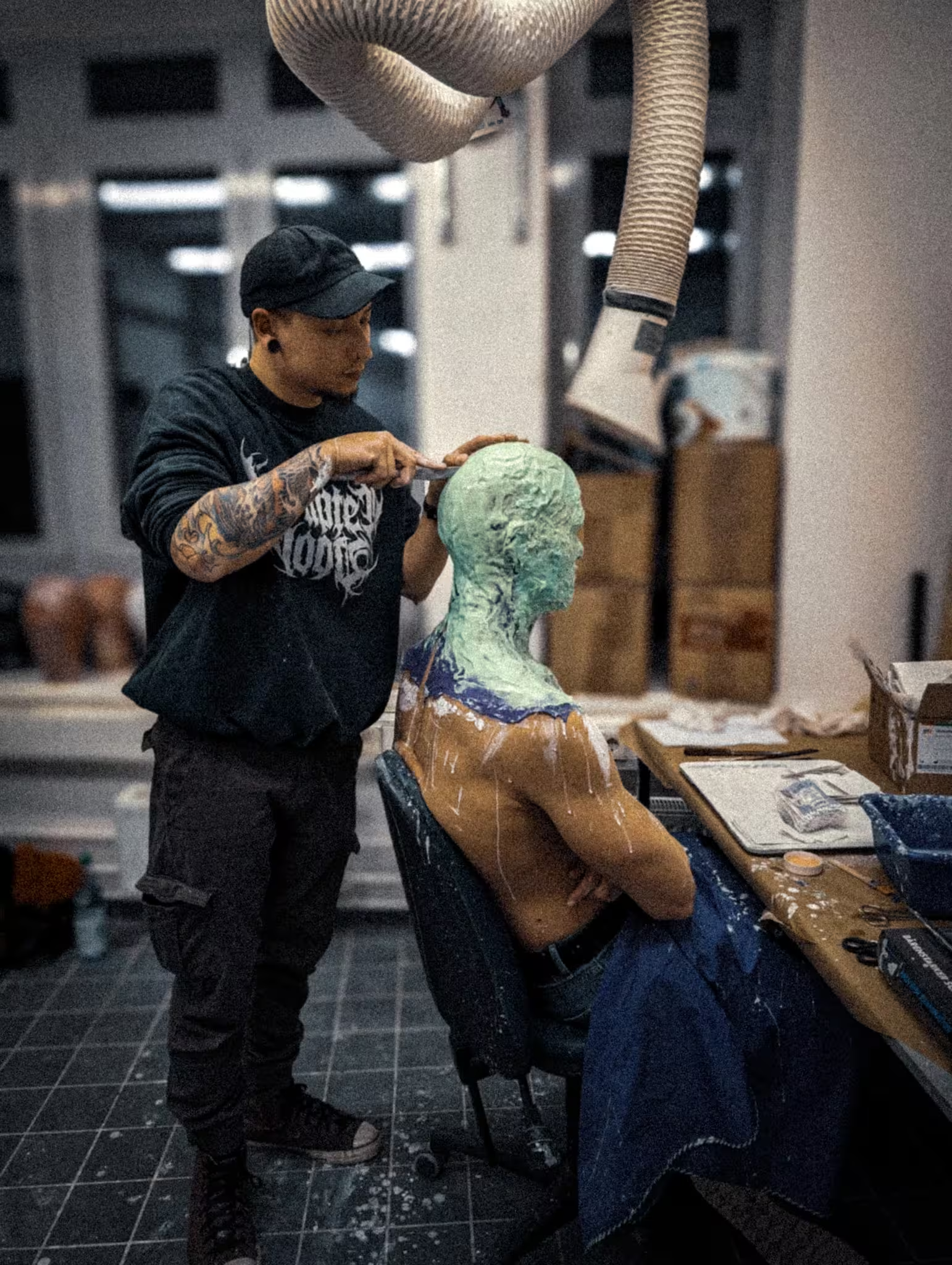
What is Cap Plastic?
Cap Plastic is a special material used in producing many encapsulated silicone prosthetics.
It forms a very thin outer layer around the actual silicone prosthetic. After application, this layer is removed or dissolved so that especially fine transitions between prosthetic and skin can be created.
The aim is not to make the prosthetic invisible, but to create as natural a transition as possible that blends harmoniously into the character make-up.
Further reading: KB-006 – Encapsulated Silicone Prosthetics
📷 Recommended image
Old Age Prosthetics – Schauspiel Hannover
ALT text
Multi-part facial prosthetics with especially fine transitions to the skin.
Why are thin prosthetic edges so important?
Even the most convincing sculpt loses its impact if the transitions between skin and prosthetic remain clearly visible.
That is why care is taken during fabrication to work the edges as finely as possible.
Fine edges offer several advantages:
more natural transitions
more harmonious integration into the make-up
less visible edges in close-ups
more convincing character transformations
Modern camera technology in particular makes this difference clearly visible.
📦 Practical example – Old Age Prosthetics
In multi-part ageing transformations, several prosthetics meet one another. Fine transitions help the individual elements later read as one continuous skin structure rather than being perceived as separate prosthetics.
➡️ Related project: Old Age Prosthetics Make-up – Schauspiel Hannover
💡 Practical tip from DoManh SFX
Many viewers subconsciously look first at the transitions of a film prosthetic. The cleaner these are worked, the more the actual character moves into the foreground.
Where is Cap Plastic used?
Cap Plastic is used above all where especially fine transitions are required.
Typical applications are:
ageing transformations
facial prosthetics
creature design
fantasy characters
body prosthetics
advertising productions
film and television
Which technique is used always depends on the requirements of the respective project.
📷 Recommended image
Knabe Mix – finished body prosthetic
ALT text
Professional body prosthetic with natural-looking transitions.
Frequently Asked Questions (FAQ)
Is Cap Plastic an adhesive?
No. Cap Plastic is not an adhesive but a material used in producing certain film prosthetics.
Is Cap Plastic used on every film prosthetic?
No. Whether Cap Plastic is used depends on the chosen fabrication technique and the requirements of the project.
Why are fine transitions so important?
They make it easier to integrate the prosthetic into the make-up and contribute significantly to a believable character transformation.
Is Cap Plastic suitable only for film productions?
No. It is also used for theatre productions, advertising campaigns, creature designs and high-quality cosplay projects, among others.
Conclusion
Cap Plastic is an important component of many professional fabrication methods for film prosthetics.
Its purpose is to enable especially fine transitions between prosthetic and skin and thereby support a natural character transformation.
As with all materials, however, the same applies here: it is not the material alone that determines the quality of the result, but the interplay of character development, mould making, choice of material and professional application.
Related services
Film Prosthetics & Character Transformations
Character Development & Sculpting
Related projects
Old Age Prosthetics – Schauspiel Hannover
Knabe Mix – Instinct3
Alien SFX Make-up
Sources
Smooth-On
KauPo
FormX
Stan Winston School
Neill's Materials