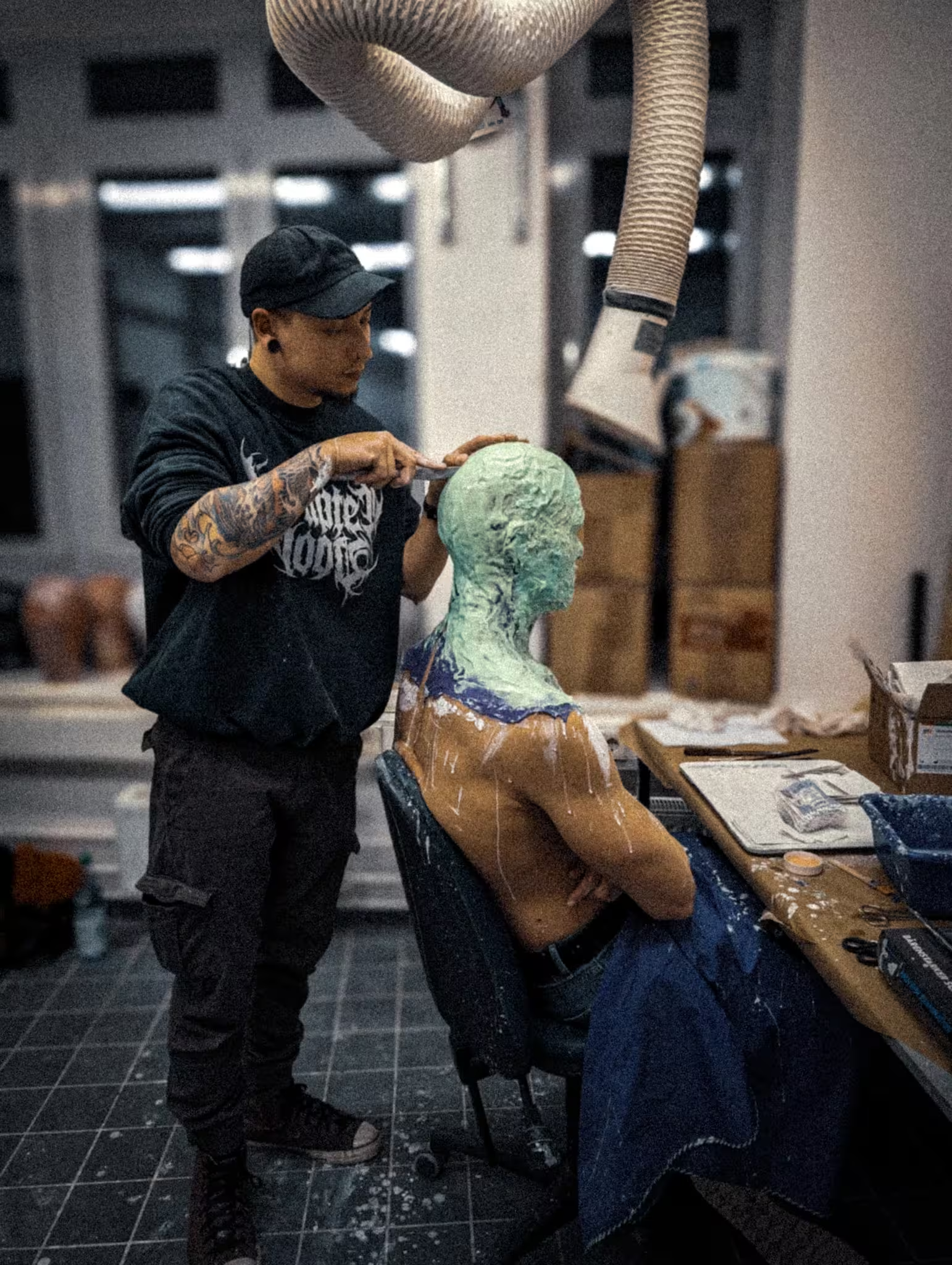
Preparation Begins Long Before the First Take
A successful shoot day doesn't start on set.
The following points, among others, are planned well in advance:
Which prosthetics are needed?
How long does the application take?
Are there backup prosthetics?
Which scenes are being shot?
What requirements does the production have?
The better this preparation, the more efficiently the shoot day can run.
Application Before Shooting Begins
Before the first take, the film prosthetic is carefully applied and integrated into the make-up.
Colours, transitions and details are then checked so that the character reads convincingly under the set's lighting conditions.
Depending on the scope of the character transformation, this process can take varying amounts of time.
With multi-piece prosthetics in particular, meticulous work is crucial so that all elements work together harmoniously.
📦 Case Study – Old Age Prosthetics
For a multi-piece ageing transformation, several prosthetic pieces are precisely matched to one another. The goal is a unified overall look that holds up both in close-ups and throughout the entire performance.
➡️ Related Project: Old Age Prosthetics Make-up – Schauspiel Hannover
💡 Practical Tip from DoManh SFX
A well-prepared shoot day saves time. When prosthetics, tools and materials are organised, the team can focus fully on the production – and the performer on their role.
On-Set Care Throughout the Shoot Day
Once the first scenes are being shot, the real on-set work begins.
Film prosthetics have to be checked regularly throughout the entire shoot day. Light, heat, sweat, movement or frequent costume changes can affect their appearance. That's why the SFX artist stays in close contact with the director, camera and make-up departments during the production.
The goal is for the character to look consistent in every shot.
Continuous Checks Between Takes
Between individual scenes, prosthetics and make-up are checked regularly.
This involves, for example:
the fit of the prosthetic
clean transitions to the skin
colour corrections
small touch-ups
coordination with lighting and camera
Often a few minutes between two takes are enough to make minor adjustments and ensure the character's continuity.
📷 Suggested Image
On-Set SFX – Alien SFX Make-up (checks during the shoot)
💡 Practical Tip from DoManh SFX
Even the best film prosthetic is of little use if it isn't checked regularly during the shoot. Small corrections between takes keep the character consistent from the first shoot day to the last.
Working With the Film Crew
Looking after a film prosthetic is teamwork.
During a shoot day, various departments work closely together:
Directing
Camera
Lighting
Costume
Make-up department
SFX artist
If, for example, a lighting situation changes or a scene is shot from a different angle, it may be necessary to adjust the make-up or prosthetic slightly.
Good communication between departments ensures that creative ideas and technical requirements come together optimally.
📦 Case Study – Knabe Mix
During the production of the “Knabe Mix” advertising campaign, the ageing prosthetic was checked regularly throughout the shoot day and reworked as needed. This kept the character transformation consistent and convincing across multiple shots.
➡️ Related Project: Custom Old Age Body Film Prosthetic “Knabe Mix”
Unexpected Situations Are Part of It
No shoot day goes exactly as planned.
Performers change costumes, scenes get rearranged, or weather and temperature alter the conditions on set.
That's why part of an SFX artist's job is to respond flexibly to new situations and find solutions without unnecessarily delaying the production schedule.
It is precisely this experience that makes professional on-set support so valuable.
📷 Suggested Image
Knabe Mix – finished body prosthetic on set
Why On-Set Support Is So Important
In the end, many viewers only see the finished character on screen. What they don't see: several hours often lie between the first and the last take – sometimes even whole shoot days.
During this time, it has to be ensured that the film prosthetic looks convincing at all times and meets the production's requirements.
This is exactly why an SFX artist's work doesn't end with the application.
Continuity in Front of the Camera
Film and advertising productions are rarely shot chronologically.
A scene that directly follows another in the finished film may in reality be shot hours or even days later.
So that the viewer notices none of this, the character's appearance has to stay constant.
On-set support therefore includes, among other things:
checking the prosthetics between takes
reworking small transitions
colour corrections as needed
coordination with make-up and camera
documenting the look for later shoot days
It is precisely this continuity that contributes decisively to a professional end result.
📷 Suggested Image
Old Age Prosthetics – Schauspiel Hannover (finished character transformation)
Fig. 3: Continuous support ensures the character looks consistent across all scenes.
💡 Practical Tip from DoManh SFX
During a project I document important details such as colouring, the position of individual prosthetics and specifics of the character transformation. This makes later shoot days easier and ensures a consistent appearance.
When the Shooting Schedule Changes
Flexibility is part of everyday life on a film production.
Scenes get moved, shots repeated or adjusted at short notice. Such changes can also affect the make-up and the film prosthetics.
An SFX artist accompanies these processes and ensures that necessary adjustments can be carried out quickly and cleanly.
This keeps the production flexible without having to compromise on the quality of the character transformation.
📦 Case Study – Alien SFX Make-up
For the Alien SFX Make-up, close coordination with the production was important so that the character transformation stayed convincing throughout under varying light and camera conditions. Small adjustments during the shoot day helped keep the figure's appearance constant.
➡️ Related Project: Alien SFX Make-up – ZDF Streamergarten
More Than Just Make-up
The work on set involves far more than applying a prosthetic.
An SFX artist helps the production ensure that the developed character keeps its impact throughout the entire shoot.
This includes, among other things:
regularly checking the overall look
quick corrections between takes
close collaboration with the director and make-up department
preparing for further shoot days
support with unexpected challenges
This is how a successful film prosthetic becomes a lastingly convincing character transformation.
📷 Suggested Image
Knabe Mix – finished body prosthetic on set
Fig. 4: On-set support ensures the character transformation stays consistent throughout the entire production.
Frequently Asked Questions (FAQ)
How long does applying a film prosthetic take?
That depends on the scope of the character transformation. Smaller prosthetics can be applied considerably faster than multi-piece characters or large-area body prosthetics. The time required is factored in as early as the production planning stage.
Why does a prosthetic artist stay on set during the shoot?
Film prosthetics are checked regularly throughout the shoot day and adjusted as needed. This keeps the character's appearance consistent across all scenes.
What happens if a prosthetic comes loose during the shoot?
Minor corrections can often be made directly between takes. The goal is to disrupt the production schedule as little as possible while maintaining the quality of the character transformation.
Do prosthetic artists only work on feature films?
No. Professional film prosthetics are also used in commercials, series, music videos, theatre productions, theme parks and content productions, among others.
Why is good preparation so important?
Careful planning saves time on set and ensures that prosthetics, materials and workflows are optimally matched to the shoot day.
Conclusion
A successful shoot day with film prosthetics begins long before the first scene and ends only after the last take.
Alongside expert application, the continuous care of the character transformation is also part of a prosthetic artist's job. Regular checks, small corrections and close collaboration with the film crew keep the character believable and consistent throughout the entire production.
It is precisely this combination of preparation, precision and flexibility that makes on-set support an important part of professional film and advertising productions.
Related Services
On-Set SFX & Production Support
Film Prosthetics & Character Transformations
Related Projects
Custom Old Age Body Film Prosthetic “Knabe Mix” – Instinct3
Old Age Prosthetics Make-up – Schauspiel Hannover
Alien SFX Make-up – ZDF Streamergarten
Sources
Stan Winston School – On-Set Prosthetic Workflows
Neill's Materials – Professional Prosthetic Makeup
KauPo – Materials for professional make-up artistry
FormX – Prosthetics and mould-making
Own project experience from film, advertising and theatre productions