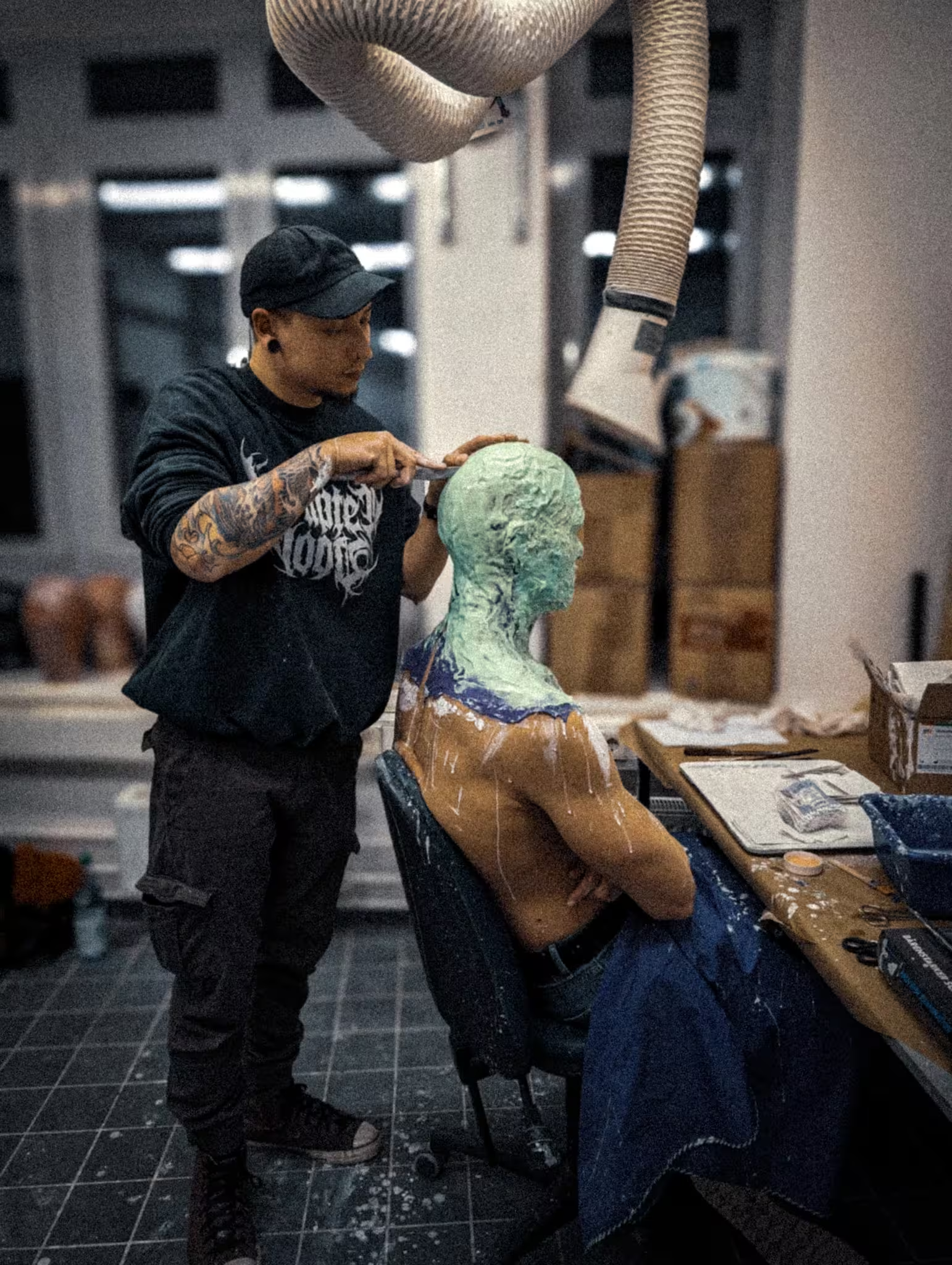
The Work Begins Before the Camera Rolls
Before the first scene is shot, film prosthetics have to be prepared and checked.
This includes, among other things:
preparing the required prosthetics
checking completeness and fit
coordinating with the production
preparing the working materials
planning the application
Careful preparation ensures the shoot day can start as smoothly as possible.
Applying the Film Prosthetics
Before shooting begins, the film prosthetics are applied precisely and integrated into the make-up.
What matters here is not only the fit, but also clean transitions and coherent colouring.
Depending on the character, several prosthetics can be combined to achieve the desired appearance.
The goal is always a natural and believable character transformation.
📦 Case Study – Old Age Prosthetics
For the ageing transformation at Schauspiel Hannover, several prosthetic pieces were combined into one coherent overall character. Careful application was the foundation for a convincing end result.
➡️ Related Project: Old Age Prosthetics Make-up – Schauspiel Hannover
💡 Practical Tip from DoManh SFX
A good application begins long before the first bit of adhesive. The better the preparation, organisation and planning, the calmer and more efficient the entire shoot day will be later on.
Care During Filming
Once the first scenes are being shot, a key part of a prosthetic artist's work begins.
During a shoot day, film prosthetics are checked regularly and adjusted as needed. Facial expressions, movement, sweat, clothing or long shooting times can cause small changes that are checked between takes.
The goal is for the character transformation to stay consistent and believable throughout the entire production.
Small Adjustments With a Big Impact
Not every correction is immediately visible – yet small adjustments can be decisive for the end result.
Typical tasks include:
checking the prosthetic edges
small colour corrections
touching up fine transitions
checking the overall look
preparing for the next scene
These tasks often take only a few minutes, yet they contribute significantly to making the character look convincing from every camera angle.
📷 Suggested Image
Alien SFX Make-up – checks on set
💡 Practical Tip from DoManh SFX
Many of the most important tasks on set go completely unnoticed by the viewer later on – and that's exactly the point. Small corrections keep the attention on the character and the story, not on the prosthetic.
Collaboration With Other Departments
On a film set, a prosthetic artist works closely with various departments.
These include, among others:
Directing
Camera
Lighting
Costume
Make-up department
Production management
Each department contributes its part to the finished picture. That's why good communication is important to keep the character coherent throughout the entire shoot.
Especially with short-notice changes to the schedule, close coordination helps respond quickly to new situations.
📦 Case Study – Knabe Mix
During the production of the “Knabe Mix” advertising campaign, the ageing transformation was checked regularly and adjusted as needed. Thanks to close collaboration with the production team, the character stayed consistent and convincing across all shots.
➡️ Related Project: Custom Old Age Body Film Prosthetic “Knabe Mix”
Flexibility Is Part of the Everyday Job
Hardly any shoot day goes exactly as planned.
Scenes get moved, shots repeated or weather conditions change at short notice. A prosthetic artist therefore has to work flexibly and find solutions without unnecessarily interrupting the production schedule.
This ability develops above all through experience and good preparation.
📷 Suggested Image
Knabe Mix – finished body prosthetic on set
More Than Make-up – Responsibility on Set
A prosthetic artist is not only responsible for applying a film prosthetic. Throughout the entire production, they help ensure that the character transformation works reliably and fits seamlessly into the shooting schedule.
This requires not only craftsmanship, but also organisation, communication and the ability to work precisely under time pressure.
Especially with elaborate characters, this responsibility is an important part of a successful production.
When Quick Solutions Are Needed
Unforeseen situations can arise on a film set at any time.
A prosthetic needs touching up, a scene is changed at short notice, or another take calls for small adjustments to the character.
In such moments, calm and structured work counts most.
The goal is always to carry out necessary corrections as efficiently as possible so that the shoot can continue without major interruptions.
📷 Suggested Image
Knabe Mix – body prosthetic during the production
Fig. 3: Regular checks and small adjustments ensure a consistent appearance throughout the entire shoot.
💡 Practical Tip from DoManh SFX
For me, on-set work means above all solving problems before they become visible. Good preparation and a structured workflow help you stay calm and focused even under time pressure.
An Eye for Detail
Many of a prosthetic artist's most important tasks remain invisible later on.
Small colour differences, fine transitions or minimal changes to a prosthetic often don't consciously register with the viewer – yet they can be decisive in whether a character transformation reads as believable.
That's why a trained eye for detail is one of the most important skills on set.
📦 Case Study – Alien SFX Make-up
For the Alien SFX Make-up, the prosthetics were checked regularly during the production to ensure that light, perspective and make-up always came together into a coherent overall picture. Even small adjustments helped keep the character's impact constant throughout the entire shoot day.
➡️ Related Project: Alien SFX Make-up – ZDF Streamergarten
A Reliable Partner for the Production
A prosthetic artist doesn't work in isolation, but as part of the entire production team.
Professional support therefore also means:
working proactively
clear communication
reliable preparation
clean documentation
a solution-oriented approach
This lets the director, camera and performers focus on their tasks while the character transformation is professionally looked after.
📷 Suggested Image
Old Age Prosthetics – finished character transformation
Fig. 4: A successful character transformation comes from the close collaboration of everyone involved on set.
Frequently Asked Questions (FAQ)
When is a prosthetic artist brought in on set?
A prosthetic artist is brought in wherever film prosthetics or elaborate character transformations are part of a production. This includes feature films, series, commercials, music videos, theatre productions and other professional projects.
Does a prosthetic artist stay on set the whole shoot day?
On many productions, yes. During the shoot, film prosthetics are checked regularly, minor adjustments are made, and the character is looked after throughout the entire production day.
Does a prosthetic artist only work with film prosthetics?
No. Depending on the production, Bondo transfers, special effects, character make-up or custom bespoke pieces are also part of the remit.
Why is on-set support important?
Light, movement, sweat and long shoot days can affect a prosthetic's appearance. Professional support keeps the character consistent throughout the entire shoot.
Does a prosthetic artist work together with other departments?
Yes. Close collaboration with directing, camera, costume, lighting and the make-up department is an important part of the work on set.
Conclusion
A prosthetic artist's work doesn't end with the finished film prosthetic. Only on set does it become clear how well character design, material choice and craftsmanship work together.
Through careful preparation, precise application, regular checks and close collaboration with the production team, a prosthetic artist helps keep character transformations convincing and consistent throughout the entire shoot.
It is precisely this combination of technical expertise, creativity and practical experience that makes on-set support an important part of professional film, advertising and theatre productions.
Related Services
On-Set SFX & Production Support
Film Prosthetics & Character Transformations
Character Development & Modelling
Related Projects
Custom Old Age Body Film Prosthetic “Knabe Mix” – Instinct3
Old Age Prosthetics Make-up – Schauspiel Hannover
Alien SFX Make-up – ZDF Streamergarten
Custom Dwarf Nose Prosthetic – HandOfBlood
Sources
Stan Winston School – Prosthetic make-up and on-set workflows
Neill's Materials – Materials and expertise for professional SFX productions
KauPo – Materials for special effects make-up
FormX – Technical information on prosthetics and mould-making
Own project experience from film, advertising and theatre productions