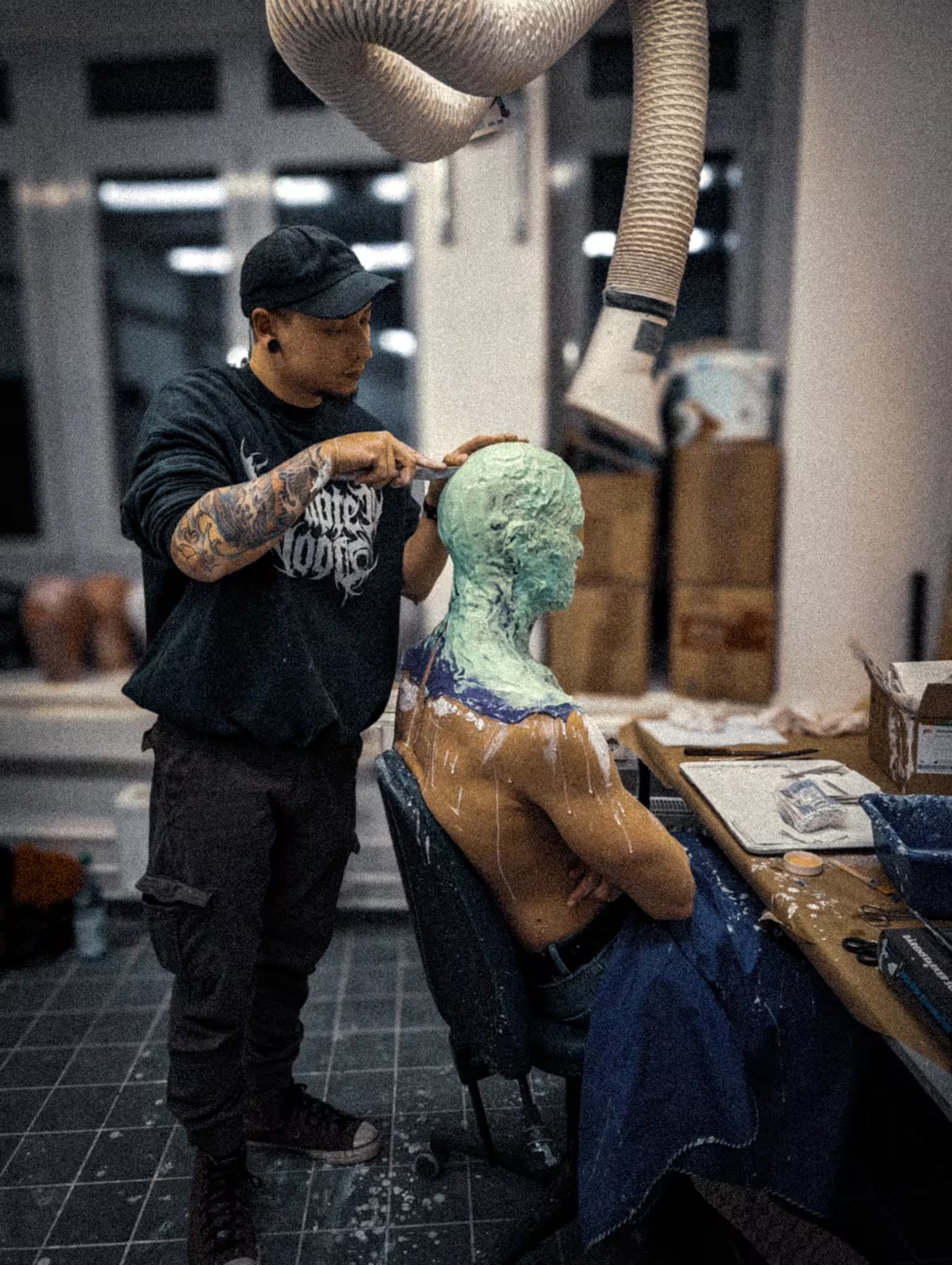
Every character is an individual project
Unlike mass-produced items, professional film prosthetics are developed specifically for a character.
The very first conversations serve to understand the production's requirements:
Which character is to be created?
Which medium is it being produced for?
How extensive is the transformation?
What demands does the shoot place on it?
Only on this basis does the actual development begin.
📷 Suggested image
Character development & modelling – sculpt
ALT text
Many steps make up a complete project
Fabrication consists of several coordinated phases.
These include, among others:
character development
lifecasting or 3D scan
sculpting
mould making
fabrication of the prosthetics
painting
quality control
preparation for the shooting day
Depending on the project, individual steps can vary considerably in scope. That's precisely why there is no blanket production time for custom film prosthetics.
📦 Case study – Knabe Mix
For the „Knabe Mix“ ad campaign, the project consisted of more than just the body prosthetic itself. Developing the ageing design, the modelling, the mould making and the preparation for the shoot were all important parts of the overall production process.
➡️ Related project: Custom Old Age Body Film Prosthetic „Knabe Mix“
💡 Practical tip from DoManh SFX
Good planning saves time in the end. The earlier a production brings the charac
Which factors affect the project duration?
There is no universal answer to how long it takes to make a film prosthetic. Every project comes with its own requirements and is planned individually.
While a smaller facial prosthetic can be comparatively manageable, extensive character transformations require significantly more preparation and coordination.
So what matters is not just the size of a prosthetic, but the project as a whole.
The scope of the character transformation
The more complex a character is meant to be, the more steps are usually required.
An ageing transformation with several prosthetic pieces, for example, differs considerably from a single nose prosthetic or a small wound.
The number of prosthetics needed also plays an important role. For film productions, several identical copies are often made so that a replacement is available at any time during the shoot.
Further reading: KB-016 – Why are multiple identical film prosthetics made? (coming soon)
📷 Suggested image
Old Age Prosthetics – Schauspiel Hannover
ALT text
Multi-part ageing prosthetics as an example of a complex character transformation.
💡 Practical tip from DoManh SFX
When scheduling, I never think only about making the prosthetic. Fittings, any adjustments and the preparation for the shooting day are all part of a professional project too.
Planning saves time
A realistic schedule is one of the most important success factors.
When character design, shooting dates and production processes are coordinated early, the individual steps can build efficiently on one another.
Last-minute changes can often be accommodated, but they usually mean extra effort for everyone involved.
Early communication therefore helps make the best use of time and resources.
📦 Case study – Alien SFX Make-up
For the Alien SFX Make-up, character development was coordinated early with the production's requirements. This allowed modelling, fabrication and later on-set support to be planned sensibly, and the finished character was ready in time for the shoot.
➡️ Related project: Alien SFX Make-up – ZDF Streamergarten
Quality takes time
Professional film prosthetics consist of many coordinated steps.
Each phase builds on the previous one and helps ensure the finished prosthetic fits precisely, functions well and looks convincing.
That's why it's worth allowing enough time for planning and execution. A structured workflow usually leads to more reliable results than a rushed production.
📷 Suggested image
Knabe Mix – mould making
ALT text
Multi-part mould of a custom film prosthetic during fabrication.
Good communication saves time and effort
A successful project doesn't begin in the workshop but with the very first exchange between client and SFX artist.
The more clearly the requirements are defined, the better character design, scheduling and fabrication can be coordinated.
Helpful information includes, for example:
concept drawings or moodboards
reference images
shooting period
the desired character
special requirements of the production
Good preparation eases the entire planning process and creates a reliable basis for all further steps.
Changes during the project
Creative projects often evolve.
New ideas, changed camera setups or adjustments to the character are part of everyday production and are generally nothing unusual.
The earlier such changes are discussed, the more easily they can be integrated into the workflow.
If adjustments only become necessary shortly before the shoot, this can affect the schedule. That's why close coordination throughout the project pays off.
📷 Suggested image
Character development & modelling – digital sculpt
ALT text
Digital character development as the basis for custom film prosthetics.
💡 Practical tip from DoManh SFX
I discuss important details with my clients as early as possible. That creates planning security and helps keep later changes to a minimum.
Why multiple prosthetics are made
On professional film productions, more than a single prosthetic is often made.
Depending on the project, several identical copies may be needed – for example as a reserve or for different shooting days.
This keeps the production flexible and lets it work reliably even on longer shoots.
Further reading: KB-016 – Why are multiple identical film prosthetics made? (coming soon)
📦 Case study – Knabe Mix
For larger productions, workflows are planned precisely in advance. That includes considering how many prosthetics are needed for the shoot and how best to organise fabrication, transport and use.
➡️ Related project: Custom Old Age Body Film Prosthetic „Knabe Mix“
Every production is unique
Commercial, feature film, theatre production or content project – every production brings its own requirements.
That's why there is no standard solution and no fixed schedule that fits every project.
A professional workflow is always tailored to the character, the scope of the production and the timeframe. It is precisely this flexibility that is an important part of modern special-effects make-up.
📷 Suggested image
Old Age Prosthetics – finished character transformation
ALT text
Custom-developed film prosthetic for a professional ageing transformation.
Frequently asked questions (FAQ)
How long does it take to make a custom film prosthetic?
There's no blanket answer. The project duration depends, among other things, on the scope of the character transformation, the number of prosthetics required and the demands of the production.
Why should I inquire about a project early?
Early planning creates enough time for character development, fabrication and any adjustments. At the same time, production processes can be better coordinated.
Can changes be accommodated during the project?
Yes. Changes are generally possible. The earlier they are agreed, the more easily they can be integrated into the existing workflow.
Are multiple prosthetics made for film productions?
Depending on the project, yes. Several identical prosthetics are often made to keep a replacement available for longer shooting days or different scenes.
When should I get in touch with an SFX artist?
Ideally during pre-production. That way character design, schedule and fabrication process can be optimally coordinated.
Conclusion
Making a custom film prosthetic is a structured process that goes far beyond the fabrication itself.
From the first idea through character development and mould making to the finished prosthetic, numerous steps interlock. How much time this takes always depends on the requirements of the specific project.
Early planning and close collaboration between production and SFX artist create the best conditions for a smooth process and a convincing character transformation.
Related services
Film prosthetics & character transformations
Character development & modelling
Mould making & special-effect fabrication
On-set SFX & production support
Related projects
Custom Old Age Body Film Prosthetic „Knabe Mix“ – Instinct3
Old Age Prosthetics Make-up – Schauspiel Hannover
Alien SFX Make-up – ZDF Streamergarten
Custom Dwarf Nose Prosthetic – HandOfBlood
Sources
Stan Winston School – Prosthetic Design & Production
Neill's Materials – materials and workflows
Smooth-On – technical information on silicone systems
KauPo – materials for professional make-up artistry
Own project experience from film, commercial and theatre productions