📖 Technical information
Content: Knowledge BaseKB-001
Category: Prosthetics
Difficulty level: Fundamentals
Reading time: approx. 18 minutes
Author: Tom DoManh – SFX Artist & Prosthetic Designer
Last updated: June 2026
Related services: Film prosthetics & character transformations · Character development · Mould making
Related projects: Knabe Mix · Old Age · Alien
Sources: Manufacturer information, technical literature and hands-on experience
🟢 Cornerstone article
This article is one of the key fundamentals of the DoManh SFX Knowledge Base.
It explains the basics of professional silicone prosthetics and forms the foundation for numerous in-depth articles on mould making, character development, materials and the production of film prosthetics.
Table of contents
What are silicone prosthetics?
Why are silicone prosthetics used?
Where are silicone prosthetics used?
Why is silicone the standard material?
Conclusion of Part 1
What are silicone prosthetics?
Silicone prosthetics are custom-made artificial skin appliances applied to the face or body to deliberately alter or extend a person's natural appearance. They are among the most important tools in professional special-effects make-up and enable character transformations that would be impossible with classic make-up alone.
Depending on the project, silicone prosthetics can represent subtle anatomical changes or complete character designs. Typical examples include ageing effects, distinctive nose shapes, pronounced cheekbones, creature features, fantasy characters or realistic injuries.
Unlike classic painting, prosthetics don't merely change the colour of the skin but its shape. This creates three-dimensional structures that blend harmoniously into the natural anatomy and remain convincing even in high-resolution close-ups.
A professional prosthetic, however, consists of far more than silicone alone. It is the result of a complex production process in which character development, sculpting, mould making, material selection, painting and application are precisely coordinated.
📷 Recommended image
old-age-man-prosthetics-make-up.png
Fig. 2: Custom-made silicone prosthetics enable realistic character transformations that go far beyond classic make-up.
Why are silicone prosthetics used?
Modern film and media productions place high demands on the believability of their characters. Cameras with 4K, 6K or 8K resolution reveal the finest skin details. At the same time, audiences expect convincing characters whose appearance moves naturally and looks credible.
This is exactly where silicone prosthetics come in.
They enable changes that appear permanent and three-dimensional without fully restricting natural facial expression. When properly made and applied, they follow the movements of the underlying musculature and integrate seamlessly into the overall look.
Professional silicone prosthetics are used, among other things, for:
Character ageing
Fantasy and science-fiction characters
Monster and creature designs
Injury and scar effects
Anatomical changes
Custom character development
Doppelgänger effects
Advertising campaigns
Theatre productions
Theme parks and horror attractions
Cosplay
Photo shoots
Social media productions
Depending on the project, the size, build and material composition of the prosthetic vary considerably. While some applications consist of a small nose prosthetic, other projects can cover the entire torso or several body regions.
💡 Practical tip from DoManh SFX
Not every character transformation automatically needs a large or particularly complex prosthetic. Often small anatomical changes – for example to the nose, chin or cheeks – achieve a far stronger effect than an entirely overloaded design. What always matters is the story the character is meant to tell.
📷 Recommended image
knabe-mix-body-silicone-prosthetic-close.jpg
Fig. 3: Fine skin structures, colour gradients and thin, tapering edges contribute significantly to the believability of a film prosthetic.
Where are silicone prosthetics used?
Professional silicone prosthetics are now a firm part of character design across numerous areas of the entertainment and creative industries.
They are used particularly often in:
Feature films
Series productions
Commercials
Streaming productions
Music videos
Theatre and opera
Theme parks
Halloween attractions
Escape rooms
Cosplay
Influencer and social media productions
Photo shoots
The requirements differ considerably. A theatre production often needs durable, more robust solutions for many performances, while film productions place particular emphasis on detail and close-ups. In cosplay, by contrast, wearing comfort, self-application and reusability are often more of a priority.
These different areas of use make it clear that there is no single perfect prosthetic. Material choice, construction and production process are always guided by the individual project.
📷 Recommended image
coldscream-cosplay-finished-sidepose-closeup.jpg
Fig. 4: Silicone prosthetics are used not only in film productions but also in professional cosplay and content production.
Why is silicone the standard material?
The development of modern silicone prosthetics has permanently changed special-effects make-up. Where materials such as gelatine, foam latex or latex were often used in the past, many professional film productions today rely on platinum-cured silicone systems when particularly realistic results are required.
The reason lies in the material's properties. High-quality silicones can be processed with extreme precision and have a natural translucency that comes very close to human skin. At the same time they remain flexible and can – depending on the material system and mix – be adjusted to different degrees of softness.
This produces prosthetics that move naturally with facial expression and remain convincing even in high-resolution close-ups.
There is, however, no single perfect material. Which solution is chosen always depends on the requirements of the respective production. Budget, shooting duration, wear, the desired look and later processing all significantly influence the material choice.
📷 Recommended image
knabe-mix-body-silicone-prosthetic-close.jpg
Fig. 5: The natural translucency of high-quality silicone prosthetics contributes significantly to a believable skin effect.
What properties make silicone so special?
Compared to many other materials, silicone offers several properties that make it particularly attractive for professional character prosthetics.
High level of detail
The finest skin pores, wrinkles and textures can be reproduced precisely. As a result, even the smallest details are preserved after casting.
Natural flexibility
Depending on the silicone system used and the mix, the prosthetic can be made soft and mobile. This allows it to follow the natural movements of the facial musculature.
Skin-like translucency
Unlike many opaque materials, silicone has a certain translucency. This property supports a realistic sense of depth and contributes to a believable appearance on camera.
Good durability
Professionally made silicone prosthetics are resistant to the stresses of longer shooting days. How robust a prosthetic ultimately is, however, always depends on construction, material choice and area of use.
Individual material adjustment
Depending on the project, material properties can be deliberately influenced. Softer or firmer mixes can be chosen for different body regions, for example.
💡 Practical tip from DoManh SFX
In my daily work I mainly use PlatSil Gel systems in combination with Deadener. This allows the flexibility of the prosthetic to be adapted to the respective body region. A forehead prosthetic, for example, places different demands than a prosthetic in the mouth or neck area. That's why the material mix is always chosen per project and not according to a fixed standard.
Are there any disadvantages?
As versatile as silicone is, the material also brings challenges.
Producing high-quality silicone prosthetics requires experience in mould making, precise material processing and careful planning. Even small mistakes in mixing ratios, moulds or processing can affect the end result.
In addition, high-quality materials are generally more expensive than simpler alternatives. For professional productions, however, the advantages often clearly outweigh this – especially when realistic close-ups or complex character transformations are required.
Silicone is not simply silicone
A common misconception is to regard all silicones as identical. In reality, there are different silicone systems with different properties and areas of application.
Professional make-up uses, among other things, special platinum-cured silicone systems that differ in viscosity, hardness, working time and mechanical durability.
The choice is always based on the requirements of the respective project. That's why even among professional studios there is no universally "best" solution – rather, the material is chosen to suit the intended use.
📷 Recommended image
knabe-mix-body-prosthetic-bts.jpg
Fig. 6: Selecting suitable materials and processing them are decisive steps in producing professional film prosthetics.
Silicone, gelatine or foam latex?
The question of which material is the best choice for film prosthetics comes up again and again. There is no blanket answer.
Each material has its own strengths and is used depending on the project goal.
MaterialTypical propertiesCommon applicationsPlatinum siliconeFlexible, highly detailed, skin-likeFilm, advertising, high-end character prostheticsFoam latexVery light, soft, good for large movementsCreature effects, masks, filmGelatineCost-effective, quick to produceShort-term effects, training, smaller productions
Note: Which material is used always depends on the project, budget, desired look and the requirements of the production. Professional productions often combine different materials depending on the situation.
How is a professional silicone prosthetic made?
Once the material and areas of use are clear, the next question arises: how does an initial idea actually become a finished film prosthetic?
The production process consists of several sequential, interdependent steps. Each one influences the quality, fit and later effect of the finished prosthetic. Even small inaccuracies in an early step can carry through to the final result.
For this reason, professional studios work to a clearly structured workflow in which every step is carefully planned and controlled.
From idea to character
Every film prosthetic begins with a creative idea. Often there are already initial concept drawings, mood boards or reference images describing the desired character.
Together with the production, the following is defined:
What story does the character tell?
What changes are necessary?
How close does the camera get to the performer later on?
How long does the prosthetic have to be worn?
Does it need to survive several shooting days?
Does it need to be particularly robust or as inconspicuous as possible?
Even at this early stage, budget, production time and shooting conditions influence the later execution.
💡 Practical tip from DoManh SFX
Good character development doesn't begin with modelling clay or silicone, but with a clear idea of the effect the character is meant to have on the audience. Every later decision is guided by that goal.
📷 Recommended image
orc-prosthetic-sculpt-side.jpg
Fig. 7: Proportions, anatomy and character traits are already defined in the concept and sculpting phase.
Lifecasting – the basis of every perfectly fitting prosthetic
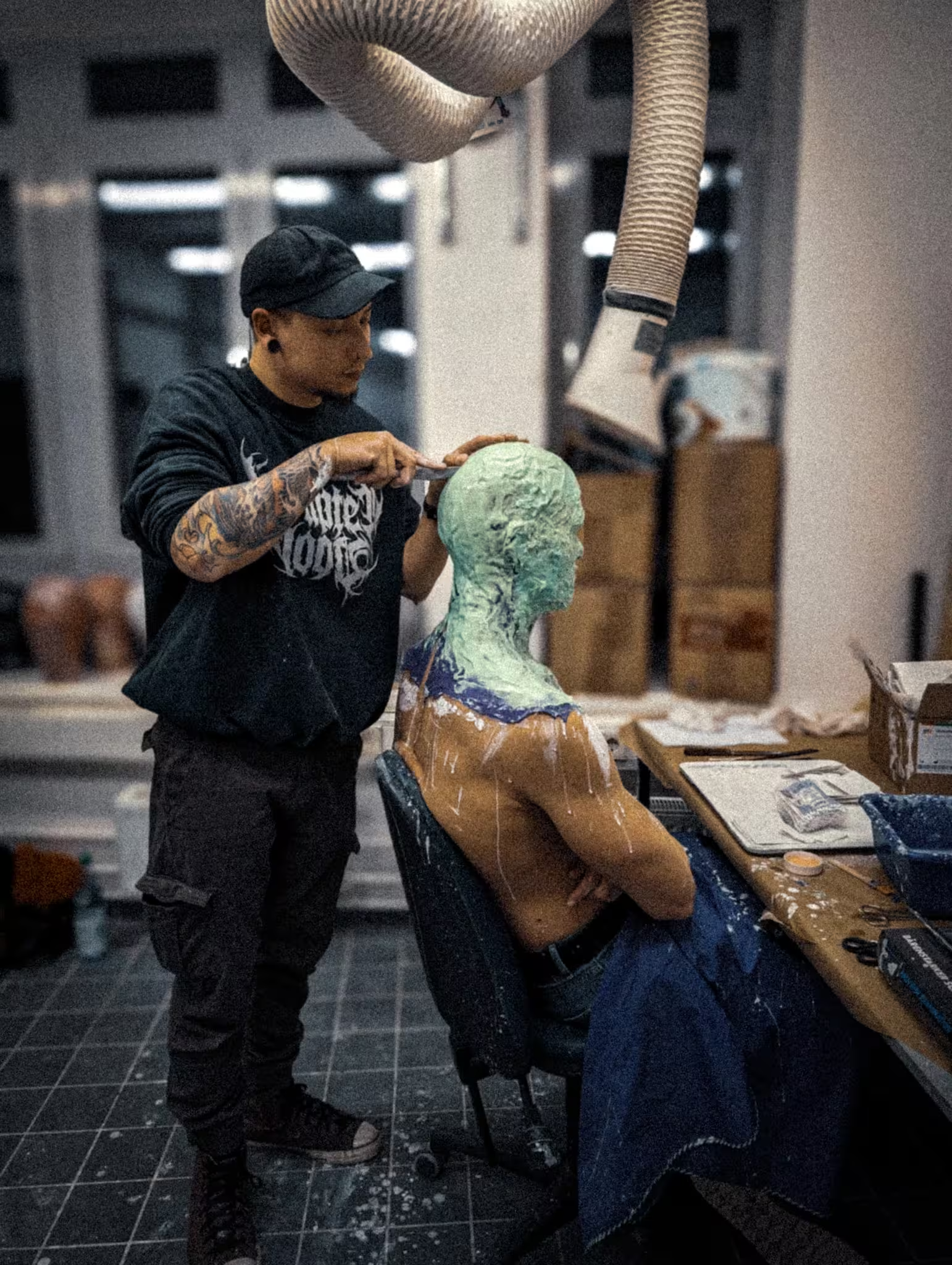
To ensure a prosthetic later fits the performer exactly, a lifecast is created first in many cases. This produces a precise impression of the face or a body part, which serves as the basis for all further steps.
A stable positive model is then made from this impression. It forms the working surface on which all changes are sculpted.
A cleanly executed lifecast considerably reduces later adjustments and contributes significantly to a finished prosthetic that sits comfortably and blends harmoniously into the natural anatomy.
Not every project, however, requires a full lifecast. Depending on the requirements, digital scans or existing reference models can also serve as a starting point.
📷 Recommended image
Currently no suitable image available in the media library.
➡️ To be added later, once a lifecasting project has been documented.
Sculpting – the character takes shape
The actual sculpting work begins on the positive model.
During sculpting, all the anatomical changes that define the later character are created. These include, among others:
Wrinkles
Scars
Bone structures
Creature features
Skin textures
Individual facial shapes
Depending on the project, the work is done classically with modelling clay or digitally in programs such as ZBrush. Both approaches have their respective advantages and can complement each other well.
Particularly important here is not only the overall shape but also the design of the finest skin details. Pores, wrinkles and surface structures contribute decisively to the later believability of the prosthetic.
📷 Recommended image
vampire-prosthetics-sculpt.jpg
Fig. 8: The sculpt defines the shape, anatomy and surface structure of the later film prosthetic.
Mould making – precision determines the result
Once the sculpt is finished, one of the most technically demanding steps begins: mould making.
Here a negative mould is produced with which all the details of the sculpt can be transferred to the later silicone prosthetic.
Depending on the project, single-part or multi-part moulds are created. Particularly complex prosthetics often require several mould segments so the finished silicone can later be demoulded cleanly.
The quality of the mould making directly influences:
Level of detail
Precision of fit
Wall thickness
Production reliability
Repeatability
For this reason, mould making holds a particularly high status in professional studios.
In my work I mainly use materials from Smooth-On for mould making. Which products are used, however, always depends on project size, geometry and the requirements of the later production.
📷 Recommended image
knabe-mix-body-prosthetic-mould.jpg
Fig. 9: Mould making transfers all sculpted details precisely to the later prosthetic.
Producing the silicone prosthetic
Once mould making is complete, the actual prosthetic can be produced.
Depending on the project, different silicone systems are used, with their properties matched to the respective area of application. Factors such as flexibility, wall thickness and movement behaviour play an important role here.
In my daily work I mainly use PlatSil Gel systems, whose material properties can be deliberately adjusted with Deadener. This allows the flexibility of the prosthetic to be adapted to different body regions and requirements.
After casting, the prosthetic is demoulded, inspected and prepared for further processing.
📷 Recommended image
knabe-mix-body-prosthetic-bts.jpg
Fig. 10: During production, material properties and processing are carefully matched to the respective project.
Quality control
Before a prosthetic is painted or applied, a careful inspection takes place.
This checks, among other things:
Surface quality
Material thickness
Completeness
Any air inclusions
Edge transition
Precision of fit
Only once these points meet the requirements does the colour design and later application begin.
Especially in film productions with high-resolution cameras, even the smallest irregularities can become visible. Careful quality control is therefore a firm part of professional workflows.
💡 Practical tip from DoManh SFX
A convincing film prosthetic is not the result of a single perfect step. Only the interplay of planning, character development, sculpting, mould making, material choice and quality control produces a result that is convincing both technically and artistically.
Painting and finish
After demoulding, one of the decisive steps for the later effect of the prosthetic begins: the colour design.
Even the most precise sculpting looks artificial if skin tones, translucencies or fine details are not convincingly realised. The aim of painting is therefore not simply to colour the prosthetic, but to reproduce the properties of human skin as realistically as possible.
Depending on the character, details such as the following are built up:
Base skin tone
Shading
Redness
Veining
Pigment spots
Freckles
Ageing features
Injuries or bruises
Professional productions often work with several transparent colour layers to create a natural sense of depth. Which products and techniques are used depends on the material, project and desired appearance.
📷 Recommended image
knabe-mix-body-silicone-prosthetic-close.jpg
Fig. 11: Only careful painting gives the prosthetic its natural sense of depth and lets it blend harmoniously into the skin.
Application – when the prosthetic becomes the character
Producing a high-quality prosthetic is only one part of the overall process. It is the professional application that ultimately determines how convincing the result looks on camera.
Before application, the skin and prosthetic are carefully prepared. The prosthetic is then positioned precisely and fixed with suitable skin adhesives. This is followed by blending the transitions and matching the colour to the surrounding skin.
Particularly with high-resolution film cameras, the transitions have to appear almost invisible. Even the smallest edges or colour deviations can stand out in close-ups.
📷 Recommended image
old-age-silicone-prosthetic-applying-close.jpg
Fig. 12: Precise application ensures that the prosthetic integrates harmoniously into the natural anatomy.
On-set support
An SFX artist's work often doesn't end with the finished application. During shooting, prosthetics have to be checked regularly and reworked when necessary.
Depending on the production conditions, factors such as sweat, movement, long shooting days or weather can affect durability. That's why minor repairs, colour corrections or re-adhering individual areas are part of professional on-set service.
Continuous support ensures that the character remains consistent throughout the entire production.
📷 Recommended image
alien-foamlatex-applying.jpg
Fig. 13: During shooting, prosthetics are checked regularly and adjusted as needed.
Care and storage
Even after the production, handling prosthetics correctly plays an important role.
Depending on the construction, some prosthetics are intended for single use only, while others can be used multiple times. Reuse depends, among other things, on the material, construction, removal and the stress endured during use.
If prosthetics are kept for later use, they should be stored clean, dry and protected from light. Extreme temperatures or direct sunlight can affect the material properties over the long term.
The key points at a glance
Silicone prosthetics change the anatomy and enable realistic character transformations.
The production process comprises planning, lifecasting, sculpting, mould making, material processing, painting and application.
The choice of material always depends on the requirements of the respective project.
A convincing prosthetic results from the interplay of all steps – not from a single factor.
Professional on-set support contributes significantly to consistent quality throughout a production.
Frequently asked questions (FAQ)
What is a silicone prosthetic?
A silicone prosthetic is a custom-made artificial skin appliance applied to the face or body to deliberately alter or extend the anatomy. It is used, among other things, for character transformations, ageing effects, fantasy designs or injury depictions.
How do silicone prosthetics differ from classic make-up?
While make-up mainly changes colour and surface effect, prosthetics additionally change shape and anatomy. This allows considerably more realistic character transformations.
Are silicone prosthetics reusable?
That depends on the construction, material and intended use. Many encapsulated film prosthetics are designed for single use, while other constructions can be used multiple times.
Why are professional prosthetics custom-made?
Every person has a unique anatomy. Custom-made prosthetics offer a better fit, more natural transitions and a more convincing result than universal standard solutions.
How long does it take to produce a film prosthetic?
The time required depends on size, complexity and production requirements. Depending on the project, several days to several weeks can lie between the initial planning and the finished prosthetic.
Which materials are used for film prosthetics?
Depending on the project, different materials are used, including platinum-cured silicone systems, foam latex or gelatine. The choice is based on the technical and artistic requirements of the respective production.
Conclusion
Professional silicone prosthetics are now among the most important tools in modern special-effects make-up. They enable character transformations that go far beyond the possibilities of classic make-up and open up creative freedom for film, advertising, theatre, theme parks and cosplay.
Behind every high-quality prosthetic, however, lies far more than the material used. Only the combination of careful planning, precise sculpting, high-quality mould making, suitable material choice, realistic painting and professional application leads to a result that is convincing even in front of high-resolution cameras.
Whether small anatomical changes or elaborate full-body prosthetics – every piece is the result of a structured workflow, craft experience and artistic precision.
Further content
Related services
Film prosthetics & character transformations
Character development & sculpting
Mould making
On-set SFX
Workshops & training
Related projects
Knabe Mix
Old Age
Alien
Gollum
ColdScream Cosplay
Further Knowledge Base articles
KB-002 – How are professional film prosthetics made?
KB-003 – Lifecasting (coming soon)
KB-004 – Character development & sculpting (coming soon)
KB-005 – Mould making for film prosthetics (coming soon)
KB-006 – Encapsulated silicone prosthetics (coming soon)
Technical sources and further information
This article is based on hands-on experience from film, advertising, theatre and cosplay projects as well as on technical information and expertise from established manufacturers and training platforms.
Recommended sources:
Smooth-On – mould-making and casting silicones
KauPo – PlatSil Gel and material systems
Polytek – technical information on silicones
FormX – mould-making and model-making materials
Neill's Materials – materials for prosthetic make-up
Stan Winston School – prosthetic design & character creation
Gorton Studio – prosthetic make-up and character development